Stroller Travel Bags: How to Choose the Right Fit
A stroller travel bag looks simple until you try to fit a folded stroller into one while a boarding line is moving. The useful question is not “Is this bag universal?” It is “Will this bag fit my stroller in the exact configuration I plan to travel with, and can I pack it without a wrestling match?”
The most reliable way to choose is to measure the folded stroller yourself, compare those measurements with the bag’s usable internal dimensions, and rehearse the whole packing sequence at home. That small amount of preparation matters more than a long feature list.
This guide explains the process from measurement to airport handoff. It does not recommend a particular brand, and it does not promise that a bag will prevent every scratch or damage claim. A travel bag is mainly a way to contain the stroller, reduce snag points, and make handling more predictable.
Start with the trip, not the bag
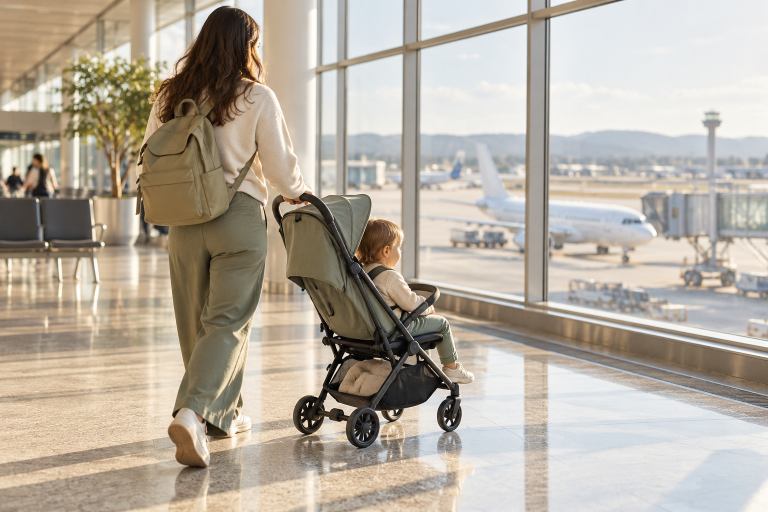
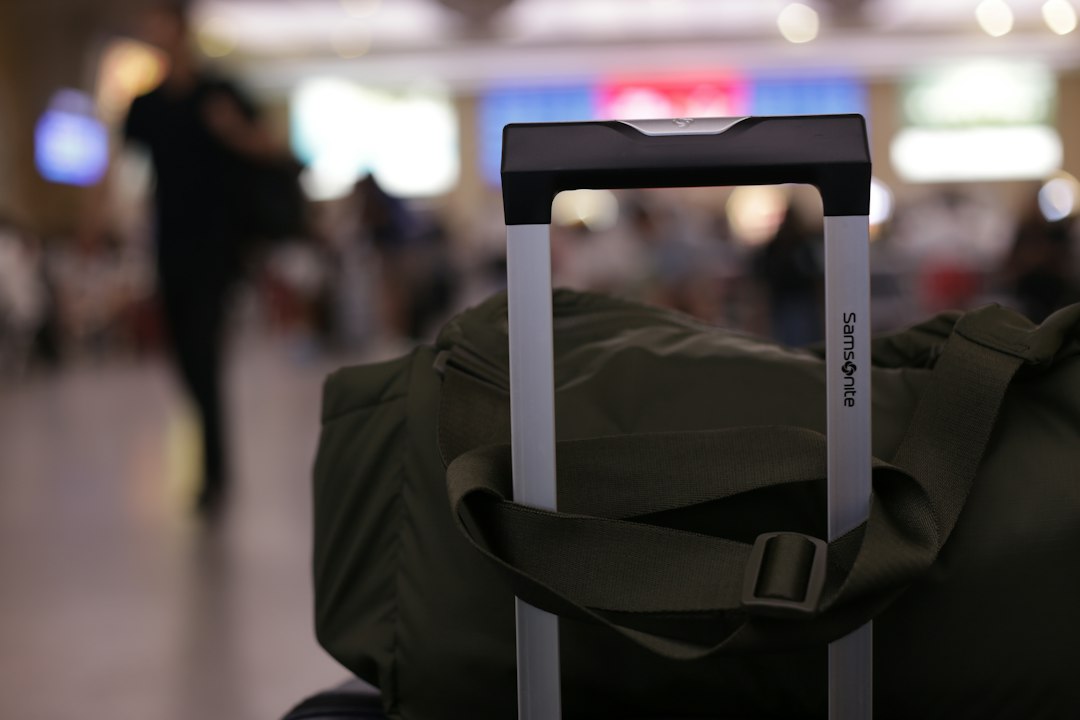
Before comparing dimensions, decide when and where the stroller will be packed. A bag that works for counter check-in may be frustrating at the aircraft door, where you may be folding the stroller beside a narrow jet bridge with a child, carry-on, and boarding pass in hand.
For gate checking, speed and simplicity usually matter most. You need an opening that is easy to find, a closure you can operate quickly, and a packed bundle you can lift safely. If you will check the stroller at the ticket counter, you may have more time and floor space, so padding and structured protection may matter more than rapid packing.
Also think beyond the airport. Will you carry the empty bag under the stroller during the day? Will it ride in a rental car, train, or hotel closet? Will you need it for storage after the trip? Those details change what “right fit” means.
What a travel bag can—and cannot—do
A well-fitted bag keeps straps, canopies, baskets, and other projections from catching on surrounding luggage or handling equipment. It can keep dirt and rain off the upholstery during ordinary handling, and it gives you one obvious place for an identification card.
A soft bag, however, is not a rigid shipping case. Fabric and light padding do not prevent every impact, compression load, or bent component. “Water-resistant” also does not mean waterproof. Seams, zippers, drawstrings, and openings may admit moisture.
Do not treat a bag as automatic insurance. Airline liability, bag-brand coverage, and stroller warranty terms are separate questions. Read the current terms that apply to your itinerary and equipment before you travel, and save any documentation you may need.
Measure the stroller in its real travel configuration

Manufacturer specifications are a helpful starting point, but measure your own stroller after folding it the way you will actually hand it over. Accessories, wheel position, handlebar angle, adapters, and even a seat left attached can change the outline.
1. Prepare the stroller
Empty the basket and pockets. Remove only accessories that the stroller manual says can be removed and that you intend to carry separately. Fold and lock the stroller. If the handlebar telescopes, put it in the travel position. Secure loose straps so they do not add false bulk.
2. Measure the three maximum dimensions
Measure length, width, and height at the widest or longest points—not just across the frame. Include protruding wheels, hinges, the folded seat, brake pedals, and the handle. A flexible tape is useful for finding the true outer envelope; a straight ruler or yardstick can help you avoid following curves.
Write the numbers down in the same order every time, such as length × width × height. Photograph the folded stroller beside the tape measure if you want a quick record while shopping.
3. Notice the shape
Two objects with identical maximum dimensions can fit differently. A rectangular folded stroller may slide into a bag easily, while an angled frame or offset wheel can catch at the opening. Note which end is wider and whether the stroller must enter wheels-first, handle-first, or on its side.
4. Weigh it if carrying comfort matters
The bag adds weight and changes where you can grip the load. If you expect to carry it any distance, weigh the folded stroller and add the bag’s published weight. Then consider whether the handle position lets you keep the bundle close to your body without dragging it.
Compare usable internal dimensions—not marketing labels
The bag must be larger inside than the folded stroller is outside. That sounds obvious, yet listings often emphasize external measurements, package measurements, or a broad “universal” description. External dimensions include fabric, padding, seams, and hardware; they do not tell you exactly how much room is available inside.
Look for explicitly labeled internal dimensions. If a seller provides only exterior dimensions, ask for usable interior measurements. If padding is thick or the opening is narrower than the body, ask whether the listed size describes the largest cavity or the actual pass-through opening.
Compare each dimension individually. Extra length cannot compensate for insufficient width. A stroller that is 20 inches wide will not fit through a rigid 19-inch opening simply because the bag has several spare inches of length.
A worked fit example
Suppose a folded stroller measures 28 × 20 × 12 inches at its widest points. A candidate bag lists usable internal dimensions of 30 × 22 × 14 inches. On paper, that leaves two inches in each dimension. That is promising, but it is not the end of the check.
You would still confirm that the bag opening reaches at least the needed width, that padding does not reduce the stated interior, and that the stroller’s widest wheel assembly can pass through without twisting. Then you would perform a home packing test while the return window is still open.
Aim for modest working clearance rather than the smallest theoretical fit. Fabric needs room to move over wheels and hinges. At the same time, a dramatically oversized bag allows the stroller to shift and may tempt you to fill unused space with loose items that the carrier does not accept.
Inspect the opening and closure
The opening determines whether an otherwise large bag is usable. A zipper that runs around two or three sides generally exposes more of the interior than a short top opening. A drawstring opening can be quick, but it may leave a portion less fully covered and can be awkward around protruding wheels.
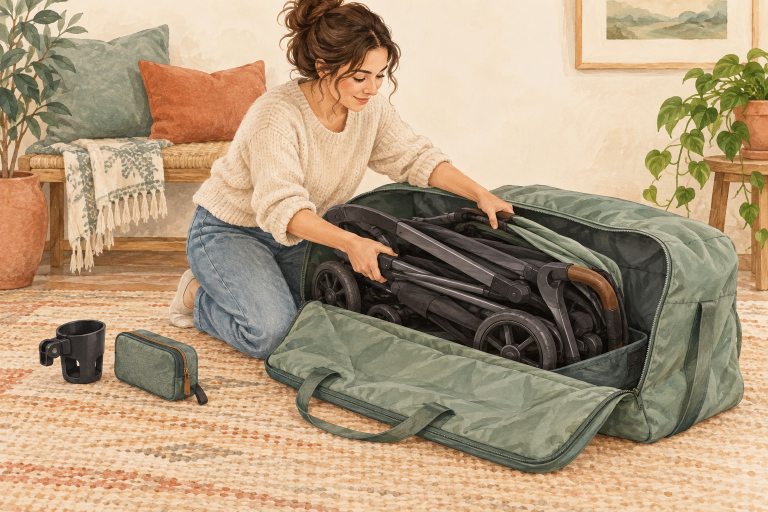
Picture the packing sequence. Can you lay the bag flat and place the stroller on it, or must you lower the stroller into a sack? Can one adult close it while keeping a child nearby? Is the zipper path likely to cross a wheel or hinge?
Examine stress points in product photos and specifications: zipper ends, handle attachments, corners, and the area where wheels rest. Reinforcement in those places is usually more relevant than decorative padding elsewhere. Make sure any buckles or straps can be tucked away so they do not create new snag points.
Choose the right balance of protection and packability
An unpadded cover is usually lighter, smaller when stored, and faster to deploy. It can contain the stroller and reduce ordinary dirt and abrasion, but it offers little cushioning. A padded bag may soften minor knocks and provide structure, yet it takes more room in the basket or luggage and can be harder to fold after use.
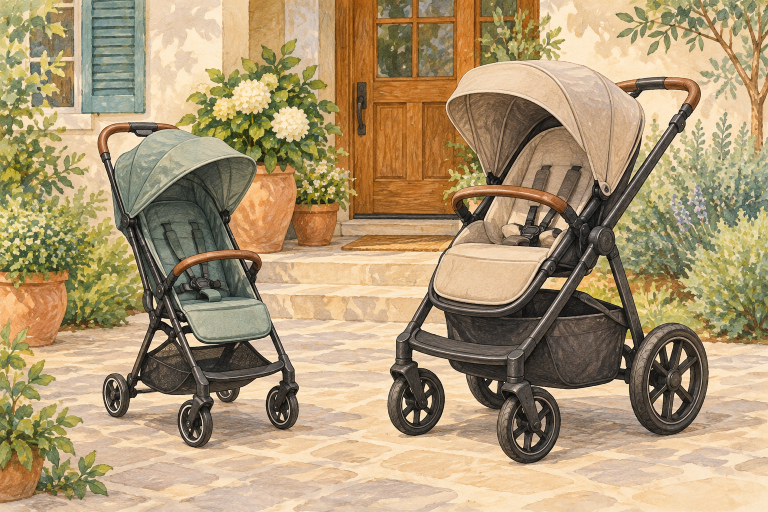
There is no universal winner. A compact stroller carried to the gate may pair well with a light, easy-to-stow cover. A larger stroller checked at the counter may justify more structure—if the bag genuinely fits and you can lift it. Your travel routine should decide the tradeoff.
If weather exposure is a concern, look for a clear description of the material and closure, not just a water-related adjective. Even coated fabric can leak at seams. Let a damp bag and stroller dry completely before long-term storage.
Check how you will carry and identify it
A correctly sized bag can still be unpleasant to use if its handles are poorly placed. Look for handles that let the packed stroller hang level and stay close to your body. Backpack-style straps may free your hands, but only if the bundle’s shape and weight feel manageable; broad claims about “hands-free travel” do not override your own lifting limits.
A shoulder strap should be removable or securely stowable before handoff. Long loose straps can snag. Handles and seams should look reinforced where they bear the full load.
Use an external identification area or a securely attached luggage tag. Put contact information inside the bag as well, in case the outer tag is lost. A distinctive but accurate label or ribbon can help you recognize the bag, provided it does not dangle into equipment.
Read the current airline rules for the operating carrier
Airline practices are not identical, and policies can change. Check the operating airline—not only the company that sold the ticket—before every trip. Confirm whether the stroller can be taken to the gate, where larger models must be checked, whether a bag is required, and whether other items may be placed inside it.
For examples of current carrier guidance, see the official child-travel pages from Delta, American Airlines, and United. Treat those pages as carrier-specific references, not a universal rule.
If your itinerary includes a partner or regional operator, check that operator too. Save the relevant page or take a screenshot close to departure, and allow extra time to ask an agent when the written rule does not address your stroller size.
Review warranty and coverage terms before buying
Some bags are advertised with coverage language, but the details matter: eligible stroller models, registration requirements, proof of purchase, deadlines, exclusions, and whether the promise applies only to a bag made by the stroller manufacturer. Read the full current terms rather than relying on a badge or product-page headline.
Also review the stroller manufacturer’s instructions. Removing wheels or seats in a way the manual does not describe can create a fit problem or damage risk. A third-party bag that physically fits does not necessarily change the stroller warranty or the carrier’s liability.
Keep receipts, model and serial information, and clear pre-trip photographs of the stroller. If a safety issue arises later, the U.S. Consumer Product Safety Commission’s stroller recall page is a useful primary source for checking announced recalls.
Rehearse the airport handoff at home
A home rehearsal is the best fit test because it exposes problems that a size chart misses. Do it with the same stroller configuration, accessories, and time pressure you expect on the trip.
A practical rehearsal
- Empty the stroller and fold it according to the manufacturer’s instructions.
- Secure approved loose parts and remove only the items you have decided to carry separately.
- Lay out the bag in the position you expect to use at the airport.
- Start a timer and pack the stroller without forcing the zipper or pulling hard on seams.
- Lift the closed bag by each intended handle and walk a short, clear route.
- Unpack it, unfold the stroller, and confirm that nothing shifted into a hinge or latch.
- Repeat once while also managing the personal item or carry-on you expect to have.
If the zipper is under constant tension, a wheel catches at the opening, or closing the bag requires two people, the fit is not travel-ready. Do not assume the fabric will stretch enough at the airport.
For more on the handoff itself, use our step-by-step guide to gate-checking a stroller. If the folded size is making every part of the trip difficult, our guide to choosing a travel stroller explains the broader tradeoffs.
Use this fit worksheet before you order
Copy this short worksheet into your notes. It turns a vague “looks big enough” decision into a check you can repeat.
- Folded stroller length: ____
- Folded stroller width: ____
- Folded stroller height: ____
- Widest rigid point and its location: ____
- Parts removed for travel, if manufacturer-approved: ____
- Candidate bag usable internal length: ____
- Candidate bag usable internal width: ____
- Candidate bag usable internal height: ____
- Opening width and shape confirmed: yes / no
- Closure clears wheels and hinges: yes / no
- Packed weight and comfortable carrying method: ____
- Operating airline policy checked on: ____
- Warranty or coverage terms saved: yes / no
- Home packing rehearsal completed: yes / no
Stop if any critical measurement or rule is unknown. Contact the bag manufacturer, stroller manufacturer, or operating carrier rather than filling the gap with an assumption.
Common mistakes that cause trouble
Trusting “universal fit”
Universal is a marketing category, not a measurement. Strollers vary in wheel position, folded shape, and accessories. Compare your numbers with usable bag dimensions.
Measuring the frame but not the wheels
Wheels and brake pedals are often the widest points. Measure the complete folded outline unless the manual specifically supports wheel removal and you plan to store the wheels safely.
Ignoring the opening
A generous bag body does not help if the stroller cannot pass through the closure. Confirm the narrowest part of the opening.
Packing for the first time at the gate
A slow or confusing packing sequence feels much harder during boarding. Rehearse until you know the orientation and can close the bag without forcing it.
Adding loose items without checking
The empty space around a stroller may look useful, but carriers can have rules about what belongs in a stroller bag. Loose items can shift, add weight, or damage the frame. Check the operating carrier’s current policy.
Assuming the bag guarantees protection
A bag may reduce scuffs and snags, but it does not remove every handling risk. Photograph the stroller, retain documents, and understand the relevant terms before departure.
When a simpler cover—or no bag—may be reasonable
You may decide against a substantial padded bag if storage space is extremely limited, you need to deploy and stow the cover in seconds, or your stroller and carrier workflow make a bulky bag impractical. A light cover can still contain straps and reduce ordinary grime if it fits correctly.
You might also skip a bag if the stroller manufacturer or carrier instructions advise a different process, or if the bag itself creates a lifting or snag hazard. The goal is not to add equipment for its own sake; it is to make the handoff more controlled.
Whatever you choose, remove unsecured accessories, follow the stroller manual, label the stroller, and confirm where it will be returned after the flight.
Inspect everything after the trip
Before leaving the airport, open the bag in a safe area and inspect the stroller. Check wheel attachment, folding locks, handle joints, brakes, canopy supports, and visible frame components. If something appears damaged, follow the carrier’s reporting process promptly.
At home, remove debris and let the stroller and bag dry. Inspect the bag’s seams, zipper, handles, and wheel-contact areas. A small tear or strained handle is easier to repair or replace before the next trip than at the gate.
The bottom line
The right stroller travel bag is the one that fits your stroller’s actual folded shape, opens wide enough for an easy handoff, closes without strain, and works with the way you travel. Measure first, verify usable internal dimensions, read the current rules and terms, and rehearse at home.
That process is less glamorous than choosing by a “universal” label, but it gives you a far better chance of arriving at the airport with a bag you can actually use.